Prime Highlights-
- Trump administration unveils $180 million in mining education grants, including a $100 million DOE initiative to build the critical minerals workforce.
- Department of Energy launches PROSPECT program aiming to double graduate output across the nation’s 14 accredited mining schools.
Key Facts-
- Department of War allocates $80 million to Colorado School of Mines, South Dakota School of Mines and Johns Hopkins University.
- University of Arizona appoints geochemist Robert J. Bodnar to lead its new mining institute as nearly 221,000 mining workers near retirement.
Background-
The Trump administration announced $180 million in new grants for mining education, including a $100 million Department of Energy initiative aimed at strengthening the critical minerals workforce and domestic supply chain.
President Donald Trump called the funding a historic step toward supporting mining schools and colleges that train the industry’s future leaders.
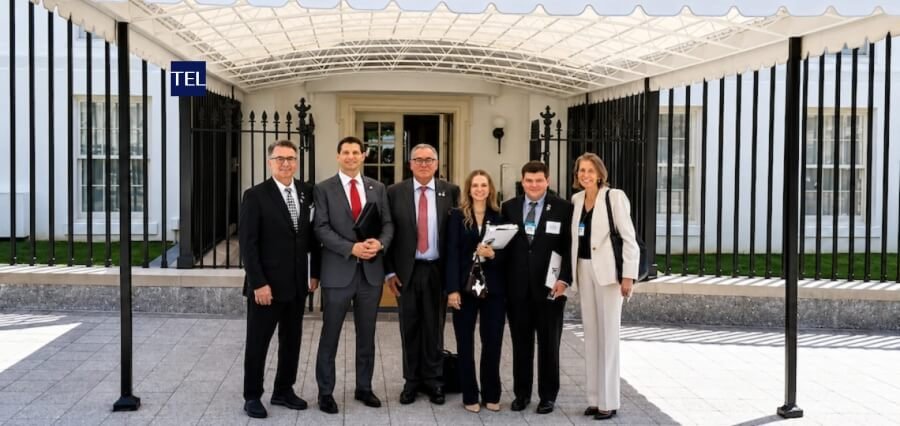
University of Arizona representatives, including senior vice president Tomás Díaz de la Rubia, mining engineering chair Kray Luxbacher, professor Moe Momayez and students Alexandra Zadro and Esteban Garza, joined a roundtable discussion on the initiative at the Department of State.
Luxbacher, who heads the university’s School of Mining Engineering and Mineral Resources, one of 14 accredited mining schools nationwide, said American mining schools stand ready to supply the technology and talent needed to achieve mineral dominance.
The Department of Energy is establishing PROSPECT, a program designed to double the number of graduates across the 14 accredited schools. The Department of War separately allocated an additional $80 million to the Colorado School of Mines, South Dakota School of Mines and Johns Hopkins University.
The Society for Mining, Metallurgy and Exploration projects more than half the mining workforce, nearly 221,000 workers, will retire soon, underscoring the need for new talent.
Díaz de la Rubia described PROSPECT as a rare opportunity to reshape how the country discovers, extracts and processes critical minerals, pointing to artificial intelligence, robotics and automation as forces reshaping the field.
The university appointed geochemist Robert J. Bodnar to lead the foundational phase of its new mining institute, intended to bring together the school’s mining-related programs and accelerate workforce development.
More than 80 percent of the country’s critical mineral supply currently comes from foreign sources, a gap the administration aims to close through domestic training and production.
At the university’s San Xavier Underground Mining Laboratory, part of its MiningWerx research hub, students and industry professionals train on the same equipment used across the mining sector, with graduates from the program experiencing full job placement.