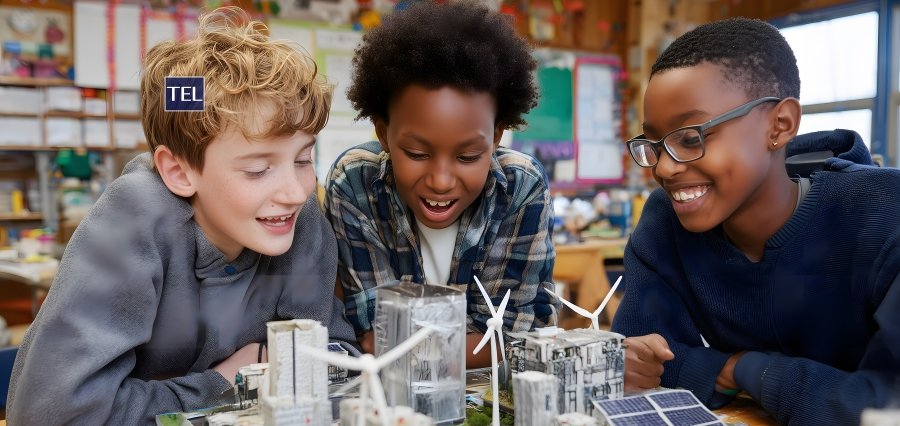
Education for Sustainability
The challenges facing the world right now, climate change, resource scarcity, population growth, and the rapid pace of technological disruption, are not problems that any single generation can ignore or pass forward indefinitely. They require people who understand both the science behind those challenges and the responsibility that comes with that understanding. This is precisely why STEM and sustainability education have moved from a niche conversation among educators into one of the most important discussions in policy, business, and community development happening today.
The Power of Integrating STEM and Sustainability
Science, technology, engineering and mathematics have long been recognized as foundational to economic development and innovation. Sustainability education has grown alongside them as a separate but equally important discipline focused on how human activity interacts with natural systems and social equity over time.
The real power emerges when these two are treated not as separate tracks but as deeply connected ways of understanding and responding to the world. STEM and sustainability education that integrates both disciplines produces learners who can analyze a problem scientifically and also ask the harder questions about what solving it responsibly requires. That combination is exactly what long-term development challenges demand from the people working to address them.
Equipping Students to Solve Complex Challenges
Long-term development, whether at a community, national, or global level, depends on people who can think across disciplines, work with complex data and make decisions that account for consequences extending well beyond the immediate moment. These are not skills that emerge naturally from passive learning. They have to be deliberately developed.
STEM and sustainability education create the conditions for exactly this kind of thinking. Working through real-world problems that sit at the intersection of science and social responsibility pushes students to apply knowledge rather than simply accumulate it. They learn to evaluate evidence, consider competing priorities, and communicate findings to audiences with different backgrounds and different stakes in the outcome.
Developing Skills for the Industries of the Future
The economy of the coming decades will look considerably different from the one that shaped current educational systems. Clean energy, sustainable agriculture, environmental technology, resource management, and responsible infrastructure development are all sectors where demand for skilled workers is growing and where that growth shows no sign of reversing.
The students receiving STEM and sustainability education today are building the foundation for careers that do not yet fully exist in their current form. The ability to work at the intersection of technical knowledge and environmental awareness is becoming one of the most practically valuable things a person can bring to a professional environment, and educational systems that recognize this early are giving their students a genuine advantage in a rapidly shifting landscape.
Expanding Access to Opportunity
A conversation about long-term development goals that does not seriously address who has access to quality education is incomplete. The benefits of STEM and sustainability education need to reach students across all communities, not just those in well-resourced schools with access to the latest tools and the most experienced teachers.
This means investing in teacher training across a wide range of school environments, building curricula that are accessible and culturally relevant, and recognizing that the students who are often underrepresented in STEM fields are frequently the ones with the most direct stake in sustainability outcomes. Broadening access to this kind of education is not just an equity concern; it is a practical development imperative.
Developing Values Alongside Knowledge
Knowledge without values produces capable people who may or may not use their capabilities responsibly. One of the most important things that serious STEM and sustainability education builds alongside scientific and technical knowledge is a genuine sense of responsibility and an understanding that the skills being developed carry obligations to the communities, ecosystems, and future generations that will be affected by how those skills are used.
This dimension of education is sometimes treated as soft or secondary to the hard skills of science and engineering. In the context of long-term development, it is anything but. The decisions that will shape the world over the next century will be made by technically capable people, and the values those people carry into their decision-making will matter enormously.
In Summary
Development goals with a thirty or fifty-year horizon are built on decisions being made right now in classrooms, curriculum planning meetings, and education policy discussions. STEM and sustainability education are one of the most direct investments available in the kind of human capability that long-term development genuinely requires.
The students learning today to think scientifically, act responsibly, and connect technical knowledge to real-world impact are the same people who will be making consequential decisions about the future in the decades ahead. Getting their education right is not a background concern; it is one of the most forward-looking investments any community or society can make.